What is a mutation, and is it always harmful?
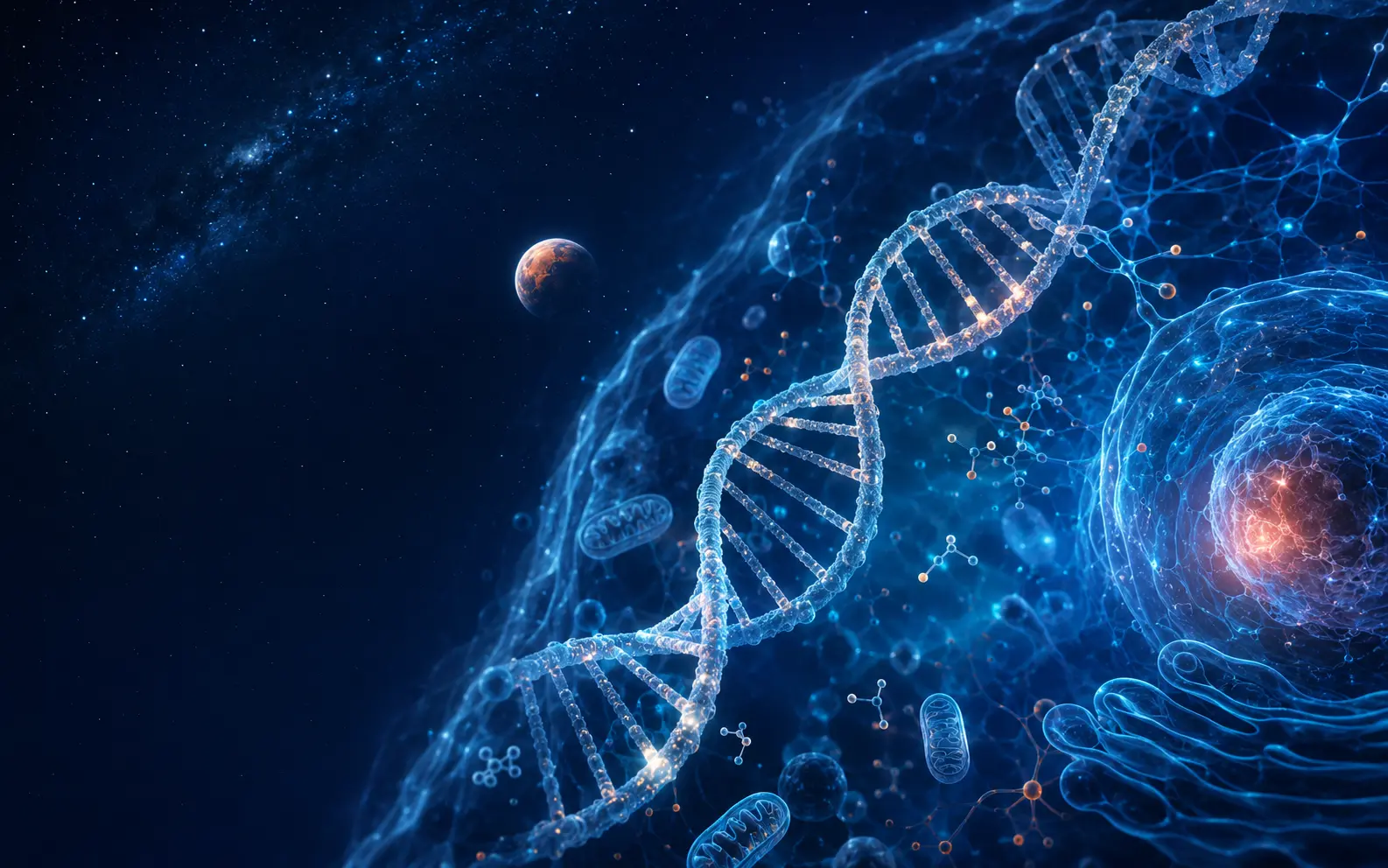
Illustration: Nauka Prosto, created with AI assistance.
A mutation is a change in the DNA sequence. One genetic “letter” may be replaced by another, or a section of DNA may be deleted, duplicated, inserted, or rearranged.
Not all mutations have the same effect. Some do not noticeably affect the cell. Others disrupt the function of a gene and may contribute to disease. Many mutations are neutral, and in rare cases a mutation may provide an advantage under particular conditions.
The effect of a mutation depends largely on where it occurs. A change within an important part of a gene or a regulatory region may have substantial consequences. A mutation in a less functionally important region may have little or no detectable effect.
Mutations arise for many reasons, including errors during DNA replication, exposure to radiation or certain chemicals, and normal processes associated with cellular ageing.
A mutation is therefore not automatically a catastrophe. It is simply a change in DNA, and its biological significance depends on the specific context.
© 2026 Nauka Prosto. Rights holder: David Cheishvili. Brief quotations are permitted with an active link to the original article. Copyright rules